Sunday, August 9, 2020

Murder of William Lewis Arwood

On August 9, 1953, 42-year-old William Arwood was inside of the bar Southside Liquors, a segregated bar, in Henderson, Kentucky.  A black man came from the black side of the bar to the white side. William and the unknown man had words with each other. The unknown man called William outside and he went out and was shot in the chest twice killing William.

On Jan. 19, 1980 a subject was called the Police Department in Sacramento, California and gave details of the murder. With a further investigation, the person believed to have made the call denied knowing anything about the murder or making a phone call. 

SOURCES:

Thursday, August 6, 2020

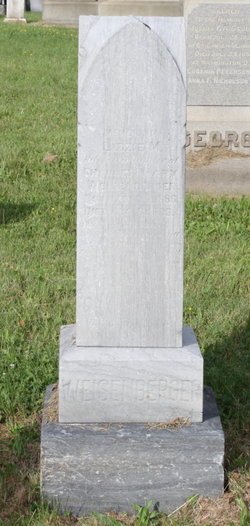
Murder of Lizzie Weisenberger


By the spring of 1899 13-year-old Lizzie Weisenberger was living with the Snell family in Washington, D.C. for 5 years. She was hired as a companion for their daughter Blanche. Her family knew the Snells and trusted them. But by spring of 1899, Lizzie who was previously happy with the arrangement was now unhappy. 

She would start to beg her mother to let her come home. It had turned out that 57-year-old Benjamin Snell, Blanche's father, was molesting Lizzie. She would tell her mother what he was doing to her and she let her come home. She would then try to keep Benjamin from Lizzie. It's not stated whether or not Lizzie's father, Karl, knew about what Benjamin did to her. 

Benjamin would start to beg for Lizzie to come back. 

At 6 a.m. Benjamin came to the Weisenberger home and asked for a glass of water. There was no water in the home so Karl left with a bucket to get some. Once Karl left Benjamin went into the home. Inside Lizzie was still asleep and her mother was in the kitchen cooking. When she saw him she screamed at him to leave. Instead, he rushed to Lizzie's room.

Her mother followed him but was not fast enough to stop what he planned. He would take a razor out, grab the girl by her hair waking her up, and slice the girl's throat twice. "Yes, I cut her throat, and I will cut yours, too!" He screamed at her mother. He would slash the razor at her cutting her arm before he fled the home.

A mounted police officer, Pat Creagh, would quickly find Benjamin. He had the razor in his hands and stated "I didn't mean to do it. I wouldn't be surprised if I hanged for my folly." Officer Creagh disarmed him and Benjamin would follow meekly. He was also said to be confused about why he was being arrested that he

Benjamin's defense would try to get an insanity plea for him. Stating that mental illness and alcohol was the reason for the murder. He said that a head injury that led to epilepsy was the cause and that bad blood was another as his parents were also cousins. He would then claim that he didn't remember the murder. Throughout the trial, his family stayed by his side.

The jury would find Benjamin guilty. He was set to be executed. By the time that he was executed he lost about 60 lbs and became mentally unstable. His family would beg for clemency. He would hang on June 29, 1900.


SOURCES:
Legal Executions in Delaware, the District of Columbia, Maryland, Virginia, and West Virginia page 19
Find a Grave
New York Daily News
Horror History
Washington Times August 13, 1899
Evening Star
The Baltimore Sun June 29, 1900
The Weekley News July 3, 1900

Wednesday, August 5, 2020

The Kayhausen Boy

In 1922 the body of a young boy was found in a bog in Lower Saxony, Germany. He was a boy between 7 and 10-years-old and had lived and died between 300 and 400 BC. The boy had been killed and it's more than likely due to sacrificial reasons.

The young boy had been bound. Strips of woolen fabric were used to tie his arms behind his back, and a length of textile was wound around his neck, passed between his legs, and back up to his neck where the two ends were tied together. It was found that he had been stabbed 3 times in the neck and once in the left arm. It was likely killed with a dagger with a 4-centimeter blade. It's unknown if he was stabbed before or after he was bound.

It's likely he was sacrificed because he was disabled and probably considered disfavored by their gods. He had suffered from an infected socket at the top of his femur and was unable to walk without assistance. His story and identity will never be known as it was lost to history.

There is a picture of the boy, but it shows how he's tied up and to be a bit too much to post on here. Both links below do have images of this mummy though.

SOURCES:
Wikipedia
Mummipedia 

Tuesday, August 4, 2020

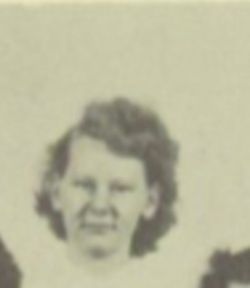
MISSING: Ione Ruth "Growt" Rehwinkle

 Ione Ruth <I>Growt</I> Rehwinkle

Sometime in 1952 23-year-old Ione Rehwinkle was working at a local bar in Rochester, Minnesota. At the time she was divorced and a mother to a 1-year-old Son. Her family believes that she was abducted from her front yard or while she was working the night shift at the bar by sailors. They believe that she had been murdered.

The original records for her missing report were lost or destroyed so there is little information in this case.

Ione is a white female and was 23-years-old at the time. She's 5'4" and 115 lbs at the time.

SOURCES:
Find a Grave
NamUs
Charley Project

Monday, August 3, 2020

Murder of Reverend George C. Haddock


In 1882 a law was passed in Iowa called the "Clark Law" making Liquor illegal. The frontier city of Sioux did not take kindly to the law as they ignored it. It also turned the town from being rough straight to a lawless frontier. The town had over 75 saloons, several breweries, and gambling houses.

Many were against the law, but some were for it especially after two murders had happened in drinking establishments. There were some who wanted changes to where Sioux City would follow the law. One of these people was 56-year-old Reverend George C. Haddock.

On August 3, 1886, the Reverend was going about noting the things about liquor. That morning he was seen noting the unloading of beer from one of the brewery wagons. Fred Lerch was standing in front of his business further up the street and screamed at the Reverend that he would cut his d-d head off if he came near there.

Shortly after 10 p.m. a shot was heard on 3rd and Waters street. Reverend George Haddock had been shot and killed. The person shot him from 25 feet away. It was no secret in why he was murdered he even told someone he expected death. He was more than likely killed for his fight against liquor.

John Arensdorf was a suspect that went to trial twice. First with a hung jury and second with a not guilty. Despite there having been witnesses that night that saw John kill the Reverend. It was said that John had gone to a bar after the trial with the jurors.

Soon after the Reverend's death liquor was completely banned fron Sioux City and the businesses were moved to South Sioux City in Nebraska. But five years later Clark Law was repealed allowing liquor to be legal again.

SOURCES:
Iowa Cold Cases 

Sunday, August 2, 2020

UNIDENTIFIED: Jan. 1, 1912, Boulder, Colorado

There is little information in this case. The John Doe was found in Boulder, Colorado on Jan. 1, 1912 and was a victim of a homicide. He was a male between 55 and 65-years-old.

SOURCES: 
Doe Network
Colorado Bureau of Investigation

Saturday, August 1, 2020

MISSING: Edna Anne Kaminski


Sometime in August of 1944 23-year-old Edna Anne Kaminski was last seen by her family in Maspeth, New York. She left behind her husband and 20-month-old daughter. She's a white female and was 23 at the time. She's 5'6" to 5'8" and 130 lbs. She has brown hair and brown eyes.

SOURCES:
NamUs
National Missing Person Directory