On September 10, 1948, two skeletons were discovered while trying to make a foundation for a tennis court in Abergavenny, Wales. One of the skulls was first discovered, and the rest of the remains were found 2 feet below the surface. There was no evidence of this being a designated place for burial. The way the bones were found made it obvious that the two were buried as bodies and not as bones buried at a later time. The two were believed to have died no less than 10 to 15 years before, but it's also possible that they had been dead for hundreds of years.
The adult skeleton was believed to be a man between 40 to 70 years old.
The child was around 7 years old.
SOURCES:
Find a Grave (man)
Find a Grave (child)
Showing posts with label Multiple Victims. Show all posts
Showing posts with label Multiple Victims. Show all posts
Tuesday, September 9, 2025

Monday, March 10, 2025
Murder of John "Henry" Bernard Nurre and attemped murder of Elizabeth Nurre
 |
| small typo on image it's 1814 not 1914 |
Henry was also one of the richest men in their area of the state and was highly esteemed by many. He had more real estate mortgages in Jackson County than anyone else. For the last 4 years, he was a member of the Board of Supervisors of Clinton County. It was estimated that he was worth $250,000.
On March 12, 1890, Henry and Elizabeth did not show up to the 13-hour church meeting. This was concerning, however, it wasn't until they didn't show up to the Thursday meeting people got worried. Elizabeth's son-in-law Theo Hullman, and the Priest were worried because the two never showed up to the meeting. This was unusual for them. The two would go home and investigate to see why the two didn't show up.
When they went inside the house they would go into either the kitchen and find Henry dead near the table. He was in a large pool of blood and had a large gash on the back of his head and another which hit his jugular vein in his neck.
Elizabeth was found unconscious in their bedroom in the attic above the kitchen. She had been attacked with a hammer and she had nine deep scalp wounds. She would stay unconscious for several more weeks before regaining consciousness. However, she could not provide any information on what had happened.
It's believed that the attack happened on the evening of March 11th. Henry was sitting in the sitting room responding to a letter from his son. The letter was received on the 10th and the letter Henry was writing was dated the 11th. It seemed Henry was nearly finished with the letter when he was killed.
The murderer or murderers tried to clean up the pool of blood. There were clothes stained with the blood found on the teakettle. They then dragged Henry into the kitchen. It's unknown why they had done this, but maybe they were thinking of destroying the scene and never got to do it for some reason.
Elizabeth must have witnessed the murder as it seemed that she had run to their bedroom in the attic. She had tried to barricade the door, but they had broken it open with a poker. They would then attack her with the poker and then the hammer when they found it. The room was left a mess with the bestead broken to pieces, the bedding scattered and blood covered almost everything in the room. It was a miracle that she survived.
In another bedroom, a safe was found. It was unknown if the killer or killers were able to get it open, but the dial had been broken off. In the same room, there was a little satchel that Henry was known to carry money and papers. One of Elizabeth's skirts was lying over it and it wasn't seen by the killers. Inside was $1,105 and some papers indicating he was planning to go to Preston that night. Likely after he was done writing his letter and eating dinner.
Theo stated that it was not normal for Henry to have that much cash on him at once and usually only carried around $100 to $150. However, he himself had recently paid him the $1,000 on Sunday so it must have been that money in his satchel.
SOURCES:
Iowa Cold Cases
Thursday, November 21, 2024
INFANTICIDE: November 22, 1957, Dublin Virginia Baby John Does
On November 22, 1957, the bodies of two infant boys were found in a box recently buried in an unmarked grave near a cemetery in Dublin, Virginia. It is not stated how the boys had died or when they died. It's possible that the two were twins.
The baby John Does were both African American Infants. The boys were 18 inches long and one was 5 lbs and the other was 4 lbs.
SOURCES:
NamUs Boy 1
NamUs Boy 2
Monday, November 18, 2024
Murder of Old Aquito and Squaw
There is little information in this case. On November 18, 1686, a man named Jonathan Neponet would be executed at the Gallows in Boston, Massachusetts. He was executed for the murders of a Native American couple known as Old Aquito and Squaw.
SOURCES:
Legal Executions in New England Page 56
Saturday, June 29, 2024
The Sacrifice of Princess Inikpi
 |
| Statue of Princess Inikpi |
Between 1515 and 1516 there was a war called The Igala–Benin War. It was a short conflict between the Igala Kingdom and the Kingdom of Benin in what is now Nigeria. For the Iglas people, their land seemed to be in trouble. It's said that streams of water were poisonous and the people were starving. All due to the Beni's
Ayegbu Oma Idoko, the Atta of the Igala kingdom would consult an oracle for help with their problems. However, the oracle would give him devastating news. His beloved daughter Princess Inikpi had to be buried alive for there to be victory. This would devastate him.
For seven days he would mourn the idea of either losing his daughter or losing his people. He would refuse to eat or drink and was in a depressed state. Inikpi seeing her father this way worried her. She would ask him what was wrong and in turn, he refused to talk. This is until the eighth day when he admits in tears to Inikpi and tells her of the oracle's prediction.
Surprisingly Princess Inikpi would take the news well. She loved her father and loved her people just as much as she was loved. She would not go against fate and volunteered for it. She had either gone to the bank of River Niger at Idah or market square. She and nine virgin slaves would be buried alive. The slaves buried with her were to help her on the other side.
It's said that Inikpi's sacrifice did protect her people. The Bini armies came to attack, but they saw the town in flames and retreated. They saw no point in attacking a town on fire and being destroyed already. It was said that the blood of the princess was what deceived them.
Princess Inkpi's sacrifice still stands as an important event. To this day she is still seen as a hero who saved her people from slaughter. A statue of the princess stands at “Ega” in Idah. Today many of the people in Idah are named in her honor.
The Gaurdian July 28, 2019
Pulse October 26, 2022
Friday, May 3, 2024
Suspicious Death of Birdie Hoffman and Murder of Gertrude Botts
At 7 pm on May 3, 1900, 18-year-old Birdie Hoffman and 16-year-old Charles "Otis" Botts went on a buggy ride in Peoria, Illinois. The two had been dating for the last two years and planned to get married. Birdie's parents tried to convince them that they were too young, but the two didn't care they wanted to marry.
Police however did not believe that she had killed herself. However, he could not be prosecuted for the crime as no evidence contradicted his statement.
Five years later on January 6, 1905, a few days before his 21st birthday Otis argued with his wife, 19-year-old Gertrude at the border house they were staying at in Peoria. The two had been constantly arguing ever since they got married the year before. During the argument, He would strike her in the face and then begin to strangle her with a slender hair ribbon killing her.
He would leave the home and go to a saloon in Knoxville and Glendale. When he entered he seemed heavily intoxicated already and caused a disturbance. He was quickly kicked out. So he would catch a car on the way to the courthouse where again he made a disturbance. He was kicked out after traveling two blocks.
On the ride, he would end up either sexually assaulting her or they had sex. Afterwards, this would upset Birdie greatly and he claimed that she was full of remorse over them doing that. He claimed that she refused to go home and they argued until 4 am. During the argument, she would grab his revolver and shoot herself in the head.
Police however did not believe that she had killed herself. However, he could not be prosecuted for the crime as no evidence contradicted his statement.
Five years later on January 6, 1905, a few days before his 21st birthday Otis argued with his wife, 19-year-old Gertrude at the border house they were staying at in Peoria. The two had been constantly arguing ever since they got married the year before. During the argument, He would strike her in the face and then begin to strangle her with a slender hair ribbon killing her.
He would leave the home and go to a saloon in Knoxville and Glendale. When he entered he seemed heavily intoxicated already and caused a disturbance. He was quickly kicked out. So he would catch a car on the way to the courthouse where again he made a disturbance. He was kicked out after traveling two blocks.
He would then make it to Wall's Saloon on Fayette St. He would hang out there until late that evening. Towards the end of the night, he became more sober. He seemed greatly worried and even told the bartender that he wanted to drown himself in the river.
He would spend the night with his friend William Trautman on Nebraska Ave. At 10 am Patrolman Brannon and McEnvoy would go to William's to arrest him. He was still asleep when he arrived, and surprised him when they arrested him. It was found that he had a razor under his pillow. It was suspected he was planning on using it on himself.
He would then be arrested the next day for the murder. He would seem indifferent to his wife's death. He stated that it was an Eastern traveler named Albert Baer. His wife was infatuated with the man and the two had spent that night together, so he had to of been the one to kill her. Police did not believe him, especially since he was the last one seen in their room. It also didn't help that he was a suspect in the murder of another woman.
There was no solid evidence, but there was circumstantial so he would be brought to trial in just a couple months. At the trial, he would deny that he knew anything about his wife's murder. The jury would find him guilty and set him to be executed. This angered him and he yelled at the jury in the courtroom.
SOURCES:
Legal Executions in Illinois, Indiana, Iowa, Kentucky, and Missouri page 20
There was no solid evidence, but there was circumstantial so he would be brought to trial in just a couple months. At the trial, he would deny that he knew anything about his wife's murder. The jury would find him guilty and set him to be executed. This angered him and he yelled at the jury in the courtroom.
SOURCES:
Legal Executions in Illinois, Indiana, Iowa, Kentucky, and Missouri page 20
The Altamont News May 10, 1900
Mount Carmel Register May 10, 1900
Herald and Review January 8, 1905
Herald and Review January 13, 1905
Marshall County Democrat March 30, 1905
Woodford County Journal April 6, 1905
Thursday, February 1, 2024
GHOSTS: Hairy Hands
.png) |
| Created in Imagine AI Generator |
Between Postbridge and Two Bridges in Dartmoor, England there is a legend of a sector who loves to cause vehicle accidents. The story begins around 1910 and drivers and cyclists have reported that in this area their vehicle would jolt and steer off the road. The cause of it? The Hairy Hands appeared out of nowhere and grabbed the steering wheel or handlebars causing a crash.
There would be no fatalities until 1921 when E.H. Helby would wreck his motorcycle. His two daughters who were sitting in the sidecar would survive, however.
It's unknown who the spirit is and why they want to cause wrecks. Some suspect that it wasn't a spirit, but people unfamiliar with the area getting in accidents and knowing the legend and blaming it on that.
SOURCES:
Sunday, October 15, 2023
GHOSTS: Crying Girl of 5 College St.

Image from Secret York
It is said that the girl could be seen in the home crying. She is mostly seen in the upper part of the house. One sighting happened in the 1950s and two of the children in the home would see her crying on one of their beds.
SOURCES:
Secret York
Saturday, September 16, 2023
Murder of Lena and Wilhelm Riedel
In 1888 36-year-old Charles Henry Riedel his wife 37-year-old Lena and their son 7-year-old Wilhelm "Willie" moved to Wilmington, Delaware from Philadelphia. Charles was German and spoke broken English. Unbeknownst to those around him he was depressed due to a lack of work and prospective want.
On the morning of September 17, 1887, both mother and child were sleeping in the same bed. Lena was sleeping on her back facing up and Wilhelm was on his side facing away from his mother. Charles would go up to both. He first shot at the wall twice, but neither woke up. He would then shoot Lena and then Wilhelm in the head. Witnesses heard Lena moaning and saying "Willie". Even if she talked evidence showed that she did not move after being shot but could have lived up to 3 hours afterward.
Charles tried to kill himself by shooting himself in the temple, but he failed. Later that morning he would go to his door and shout that he would shoot everyone. He would then yell at Mrs. Gottilieb Wachter to see what he had done upstairs. This scared her and she rushed to her husband who was working at the mill at the time.
The two would return and enter the home. Upstairs they would see the bodies of the mother and child still in bed. He would then be asked what he had done by them. "Just what I said I would." When they left the house Charles locked the door behind him. This was when someone was sent to get an officer.
Later that morning Officer Sherry and Gustave Kolock would go to the home. The front door to the house was locked so the back of the house to peer in to see Charles smoking. The officer wanted someone to distract Charles briefly as he snuck in through the back to arrest him. Gustave's brother did so as he joined the party. They did this and Charles willingly went with the officer and only asked to get his money before leaving. It was $21.70 (Around $667) one of the $5 bills was stained with blood. He grabbed it from the mantel and left with the officers. As he was put in the carriage Charles stated "I shot my wife. I shot my child. I'll shoot everybody."
He was found guilty and on August 10, 1888, Charles would be executed. He was welcoming the execution. One reporter would ask how Charles would feel if the governor would let him live a little longer. Charles would respond with "I will kill myself. I do not want to live this way. " He was religious but refused spiritual consolation.
SOURCES:
Legal Executions in Deleware, The District of Columbia, Maryland, Virginia and West Virginia. Page 9
The Morning News September 19, 1887
Daily Republican September 21, 1887
Daily Republican May 16, 1888
The Morning News August 10, 1888
Tuesday, July 4, 2023
GHOSTS: Brides of Trivale Forest in Pitești
 | |
|
The first bride was the daughter of a rich landowner. She had fallen in love with a poor servant, but her father had other arrangements. He had found an old rich man for her to marry. The maiden decided that she could not marry someone she did not love. On the wedding day, she and the servant would run into the Trivale Forest. Her father not far behind would find the couple and in his anger kill the servant and then behead her. It's said that she would give her father nightmares by visiting his dreams in her wedding dress. It's believed that this is what led to his death. It's said that she haunts an abandoned home, possibly her own that's in the forest.
The second bride story would happen in the 1970s to 2000s. A taxi driver would take a fair and the woman would ask him to drop her off at an abandoned site in the forest. The woman told the driver that she would go inside and get the money and come back out. For reassurance, she would wrap her wedding ring in a handkerchief and give it to him. Tired the taxi driver would fall asleep and when he woke up he was elsewhere. He was in a nearby housing estate and he drove around confused. He would find ask around about the woman and would find out that yes she used to live in the area, but died 10 years before. Her husband had died in a car crash (or trampling) and she killed herself. Taxi driver would find that the ring was attached to a rotting finger.
SOURCES:
Wikipedia
POV21st
Steemit
Friday, June 23, 2023
William Zinsmeister Shoots up a Picnic
On June 23, 1923, 35-year-old William Zinsmeister would question his son-in-law. He would inquire where his daughter, 15-year-old Mamie, was attending a picnic for the St. Williams Catholic Church in Louisville, Kentucky. He would then ask who she was attending with and if it was the boy he disapproved of. He would then call a taxi to come get him at his soft drink stand at 1:30 p.m.
Before leaving he would tell his son-in-law that he "I'm going to kill 5 kids this afternoon". His son-in-law would try to make it to the river before him. He left in the taxi with two revolvers and over 75 rounds. The taxi would bring him to the picnic area of the Ohio River. There was nothing unusual about how William was acting in the taxi.
When they arrived William would leave the vehicle and walk towards the river. The Taxi driver would stay and chat with someone. He would then walk down to his daughter who was sitting on a log next to the water. 18-year-old Thomas Mullaney and 16-year-old Sarah Connolly were in the water near her.
William would be greeted by Mamie saying "Hello Daddy." He would then ask his daughter "What are you doing out her Mamie?". She responded with something along the line of to have a good time and her father's response was "Well I'm going to kill you." He then pulled out and began shooting.
Mammie died almost instantly with two shots to the head. He then began shooting at those in the water. 16-year-old Sarah Connolly would be shot and killed. 16-year-old Gertrude Franconia, and 18-year-old Charles Eifler would be injured. Thomas would be able to get one of the revolvers from William and received a wound to the shoulder and was hit on the head.
Those witnessing the madness would run screaming towards where the Taxi was parked. "He's shooting people in the water." After the shooting William would flee across fields on foot towards his childhood home and where he was born. He was a few hundred feet from his former home and would kill himself.
There were only two deaths, Mamie and Sarah. Sarah's body was washed away and a search would be done for it. She wouldn't be found for two days. Her body would be found down stream about a mile from the scene. The rest were injured with non life threatening wounds.
SOURCES:
The Puducah Sun-Democrat June 25, 1923
Messenger-Inquirer June 25, 1923
The Courier-Journal June 25, 1923
Hinton Daily News June 25, 1923
Sunday, June 11, 2023
Serial Killer: Rebecca Smith

In May 1831 26-year-old Rebecca Smith would may Philip Smith. He was known as a drunkard. After Rebecca's mother's death in 1846 the £100 she inherited they moved to Westbury, England, and their money was wasted away by Philip. During the marriage they would have their first child, Jane, in 1832 she would have 10 more none of them living very long after. This would cause Rebecca to work as a crop picker and vegetable grower. This caused the family to live in a visible state of poverty of health.
Their last child, Richard, would be born on May 16, 1849. He was seemingly healthy, but Rebecca would start to tell people the opposite. Even before Richard was born she was asking around for rat poison/ arsenic. She would ask a girl, Caroline Mackay, to buy some. Soon after he became sick on June 7th.
People suspected Rebecca to have killed him. The local registrar, George Shorland, had initially listed the cause of death as unknown, but rumors changed his mind. An inquest was done on the child's death and Richard's body was exhumed on June 22nd. It was found that he was poisoned with arsenic. July 18th two more of her children were exhumed and found to have been poisoned with arsenic.
On August 9, 1849, Rebecca was put on trial for only Richards's murder. It took 30 minutes to find her guilty, but they recommended mercy for her. The judge ignored it and sentenced her to death. Two petitions for mercy were sent to the Home Secretary to help save her, but she was still set to hang. Knowing that death awaits her a week after her sentence she would make a confession to the prison chaplain.
Out of her 11 children, the oldest one survived to adulthood. Two had died from natural causes.7 more of her children were poisoned and killed the same way Richard was. She had poisoned them all with arsenic.
Rebecca's execution was heavily favored by the general public even though infanticide wasn't viewed as bad as a standard murder. Women in these cases don't typically get capital punishment and there is usually some sympathy for the mothers. There were factors that weighed against Rebbecca. She wasn't some young scared and ignorant mother at the time she was 44. Poisoning the child compared to smothering or drowning was seen as especially cruel.
On August 23, 1849, Rebecca was to be hanged in New Prison in Devizes. Early in the morning the streets leading to the goal were filled with people to watch the hanging.
SOURCES:
Saturday, December 31, 2022
Murder of Bernard Quinn
At 7 p.m. on January 1, 1923, Bernard and Elizabeth Quinn were having a New Years party at their home at 1 Woodbine Street, Hendon, Sunderland. At the party were at least4 other people including Elizabeth's mother Elizabeth Cassidy. The party would only end in tragedy.
Elizabeth and 60-year-old Daniel Cassidy had been separated for a while and she was living in Manchester at the time. She wrote earlier to her daughter she would spend Christmas and New Year with her in Sunderland. This information was told to Daniel in hopes of reconciling their relationship. This however was not the case as when as he had a different thought in mind.
Daniel would show up to the party with a revolver. He would shoot six times at people in the room. Bernard, his mother-in-law, and his wife were all three shot. A downstairs tenant, James Coggins, would hear the shots and rush upstairs. He would see Daniel with the revolver.
When he came into the room Daniel struck him with the revolver. James would knock the gun out of his hands and bring him to the ground. He would then march Daniel along Hendon Road until a policeman was found.
The three who were shot were brought to the hospital. Bernard was beyond help and would pass away. The other two would recover from their injuries.
Daniel would be taken to trial and try to plead insanity. The jury did not believe there were any signs of insanity from Daniel and he was found guilty and set to hang. On April 3rd Daniel would be executed in Durham.
SOURCES:
British Executions
Evening Chronicle January 2, 1923
Evening Chronicle January 9, 1923
The Gloucestershire Echo January 15, 1923
The Shepton Mallet Journal, City of Wells Reporter, and County Advertiser April 6, 1923
Elizabeth and 60-year-old Daniel Cassidy had been separated for a while and she was living in Manchester at the time. She wrote earlier to her daughter she would spend Christmas and New Year with her in Sunderland. This information was told to Daniel in hopes of reconciling their relationship. This however was not the case as when as he had a different thought in mind.
Daniel would show up to the party with a revolver. He would shoot six times at people in the room. Bernard, his mother-in-law, and his wife were all three shot. A downstairs tenant, James Coggins, would hear the shots and rush upstairs. He would see Daniel with the revolver.
When he came into the room Daniel struck him with the revolver. James would knock the gun out of his hands and bring him to the ground. He would then march Daniel along Hendon Road until a policeman was found.
The three who were shot were brought to the hospital. Bernard was beyond help and would pass away. The other two would recover from their injuries.
Daniel would be taken to trial and try to plead insanity. The jury did not believe there were any signs of insanity from Daniel and he was found guilty and set to hang. On April 3rd Daniel would be executed in Durham.
SOURCES:
British Executions
Evening Chronicle January 2, 1923
Evening Chronicle January 9, 1923
The Gloucestershire Echo January 15, 1923
The Shepton Mallet Journal, City of Wells Reporter, and County Advertiser April 6, 1923
Thursday, December 29, 2022
December 30, 1903, Iroquois Theater Fire 1 Unidentified
 |
Image created by Charles N. Landon and published by the Tacoma Times |

The fire extinguishers that the theater had were meant to be thrown at fires on the ground and were useless against this fire as it rose. Three exits were forced open but unluckily lead to unfinished fire escapes. Some of the doors opening caused the fire to increase. Many people were trampled, crushed and asphyxiated in the fire.
Even though the theater claimed before the fire that it was "absolutely fireproof" it was not. It had been noted by several people including the fire department captain, and the editor of Fireproof Magazine that it was not. In fact, it was hazardous as the theater did not follow the rules. The fire warden was warned, but because they knew the owner would ignore it. Unfortunately, the carelessness of the owners caused 602 people to die.
One of the victims was never identified.
The victim was a white woman around 50-year-old. Her face was still recognizable when she died. She is buried in Montrose Cemetary in Chicago.
SOURCES:
Unidentified Wiki
Wikipedia
Find a Grave
Thursday, August 4, 2022
Lovers of Modena

In 2009 archeologists found a pair of skeletons in present-day Modena, Italy. The skeletons were buried with their hands interlocked. It's believed that two had died between the 4th and 6th century CE. It's believed the area they were found may have been a war cemetery.
It was an unusual grave as at the time people were not typically buried holding hands. It is not unheard of though as there were many other similar burials that went against the norm throughout history. Initially, because of the pose, it was believed that it was a man and a woman in the grave, but later testings on the enamel peptides by the University of Bologna proved it wrong. Both people in the grave were middle-aged men. It's unknown what the relationship was between the two. It's possible instead of lovers, they could have been, siblings, cousins, or close friends. All is known is that they would not have been buried this way without some sort of close relationship.
SOURCES:
Wikipedia
Saturday, March 19, 2022
Murder of Lenore Anna Cohen and Charles "Charlie" Murray
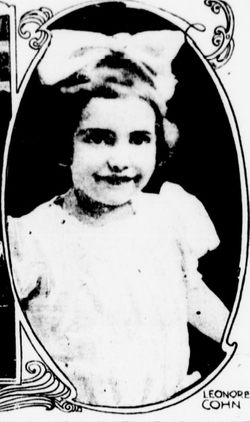
On March 19, 1915, little 5-year-old Lenore Cohen was seen in the Tenement building she lived on 3rd Ave. in Manhattan, New York by a neighbor. She smiled and showed the milk and candy she had. Her Aunt Mrs. Eckers asked the young girl to go on an errand to get milk for her. Leonore was excited as a penny was usually a reward.
Ms. Augusta Johnson lived on the second floor. She heard a small cry outside her door 15 minutes after the other neighbor saw her. She opened the door and saw nothing, but stumbled over Leonore when she stepped out the door. The murderer probably heard Augusta's screams as it had aroused everyone in the Tenement. Leonore was still alive at this point. and was carried up to the third floor where her aunt lived. Her cousin tried to resuscitate her as she was foaming from the mouth, but she did not survive.
She had been hacked at with a knife. She had also been "criminally assaulted" possibly meaning molested. A later article states that her clothes were unbuttoned. There were finger marks on her throat. There were two sets of stairs in the building and Leonore didn't typically use the ones she was found on. Police believed that the murderer forced her to the area she was found. There was a cord found with grey hairs and is unknown if it was a part of the case.
It was brought to the police's attention that girls on 3rd Avenue have been harassed by an oldish guy who offered to buy them candy if they go with them.
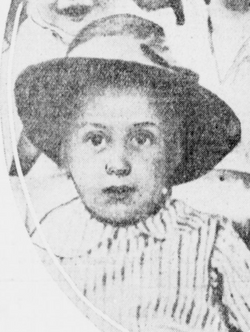
Less than two months later on the night of May 3, 1915, 4-year-old Charles Murray was playing in behind the Tenement building he lived in on First Ave. in the East side of Manhattan, in New York. He was last seen alive 20 minutes before he was discovered. His 6-year-old sister walked into the hallway and saw a "foreign man" leaving it in a hurry. Shortly after she found her brother.
There are two gruesome crime scene photos. I will not post it as it shows the boy's intestines, but it's obvious whoever murdered him gutted him. It's described that the perpetrator hacked at the boy. His clothes were left unscathed from knife marks as the perpetrator unbuttoned his shirt before killing him. Just like the murderer of Lenora had. One article notes that a piece of the body was taken.
Several letters were sent to the mother of Leonore. The writer claimed to be the killer and boasted of his crimes stating the Eckard's (relatives of theirs) knew of the murders. The letters were signed with H.B. Richmond, Jack the Ripper. It was later found that a man named Edward Richmond had written the letters.
A letter was also sent to Mrs. Murray, but it seems to have been written by another person. This letter claimed they were going to continue their crimes.
There were several suspects, but none of them were convicted of the crime.
SOURCES:
There were several suspects, but none of them were convicted of the crime.
SOURCES:
New York Tribune March 20 1915
Chronicling America March 20, 1915
The Brooklyn Citizen March 21, 1915
Buffalo Courier March 22, 1915
New York Tribune March 20, 1915
Wilkes-Barre Semi-Weekly Record May 7, 1915
Evening Public Ledger May 6, 1915
The Washington Post May 9, 1915
Daily News May 16, 1915
Buffalo Courier March 22, 1915
New York Tribune March 20, 1915
Wilkes-Barre Semi-Weekly Record May 7, 1915
Evening Public Ledger May 6, 1915
The Washington Post May 9, 1915
Daily News May 16, 1915
Saturday, February 12, 2022
GHOSTS: The Ship of the Lady Lovibond
 |
| Photo by Annie Spratt |
There is a legend of a ghost ship called The Lady Lovibond. The story goes that the ship was at sea on Feb. 13, 1748, because the Captain, Simon Reed sometimes Simon Peel, had just married and was celebrating with a cruise. It was said the ship was bound for Oporto, Portugal. Despite superstitions of women bringing bad luck on board, he would bring his new wife Annetta with him.
Below deck Simon and Anneta were celebrating with their guests. A first mate, John Rivers, a rival for Anneta's love was pacing the decks in a jealous rage. John thinking that he'd never get Anneta's love grabbed a heavy, club-like belaying pin from the rail. He would sneak up being the crewmember at the wheel and hit him with one crushing blow. He would take control of the ship and steer the ship into the Goodwin Sands killing everyone.
It is said that the ship was seen again on its 50th anniversary in 1798. It was reported by at least two ships. The ship was seen again in 1848, and again in 1948. It was said that in 1998 there was no reported sighting of the ghost ship, but maybe they were unknowingly seen. In 2048 it will be the next time you'll be able to see the ship.
In actuality, it's unknown if The Lady Lovibond ever exists. The earliest known mention of the ship was from a 1924 article. It's possible the ghost story was created for Valentine's Day type ghost story.
SOURCES:Saturday, December 4, 2021
Murder of Willie, Ella, Dora, and Lizzie Alberti

In April of 1874, 17-year-old Lizzie Roemer and 22-year-old Louis Alberti would marry. They would have 8 children together unfortunately in 1884 they would lose their son Louis and in early 1894 they would lose their infant daughter Caroline. In 1885 Lizzie would lose her 15-year-old sister Dorthea. These deaths would affect Lizzie in 1894.
In May of 1894, Lizzie would shortly move out of their home on 44th and Winnie St. in Galveston, Texas. It was decided she would stay with her parents because she had become occasionally violent and unbalanced. She would soon move back into the home though she was still not acting like herself.
On December 4, at 6:30 pm 1894 Lizzie would call 5 of the children to take a sip of wine, Wilehemia (14) stayed studying in another room. Emma (16), Ella (10), Lizzie (8), Dora (6), and Willie (4) would drink the wine.
She offered him some wine and he obliged. He noted that she used a different bottle than that of what the children had. He didn't think anything of it. One of the children would then tell their father that she had poisoned them. He reassured the child that she didn't. He would go back to work in his shop adjoining the home.
The children would soon complain of stomach cramps. From his shop, he could hear that the children were in great agony and rushed over to the home. When he came in Willie had collapsed to the floor and Lizzie was trying to bring him to the bed. He would confront the wife who was sitting quietly in a chair as her children were dying.
She told him that there was morphine in the wine and she was going to poison herself. Mr. Alberti would call for a doctor. He and Wilhemla would be crying and watching in terror as the children died one by one. Willie would die shortly after the doctor came at 7:30. Dora would die next and then Lizzie would die last. Emma was the only one to survive the poisoned wine. It was found out that she had told the children the previous Sunday that she was going to the city to buy poison to kill herself and them.
This whole time Mrs. Alberti was seen as indifferent. After her arrest, she stated that she had been ill for the last 8 months that brought her to do this. Even on the day of her children's funeral, she sat in her cell calmly and seemingly unremorseful. She did want to see her husband though. She expressed while imprisoned that her only regret was that all the children had not died and that she did not take the poison as intended and died also. She rejected the idea that she was insane and was willing to take the consequences for the murders. She would not give an answer to the reason why she wanted to kill the children and herself.
She threatened to starve herself to death and was threatened that they would inject the food if she would not eat. She would reluctantly eat the food provided. I couldn't find out what her punishment for the murders was, but she would die almost 3 years later on September 30, 1898.
SOURCES:
Austin-American Statesman December 5, 1894
The Galveston Daily News December 6, 1894
Weekly Clarion-Ledger December 13, 1894
Monday, September 27, 2021
Murder of Frances Ruscombe and Mary (Champness) Sweet
On September 28, 1764, Frances Ruscombe and her maid Mary (Champness) Sweet were brutally murdered in Frances's home on Green College in Bristol, England. The murders were described and being barbarous and brutal.
The murder was done during the day while people were passing and repassing the door. The home was within a few yards of the cathedral and during divine service. Even though the area was busy that day there was no clue who brutally murdered the two women.
It would eventually be demolished in 1860. The house stood what is now part of the Royal Marriot Hotel.
SOURCES:
Twitter @WeirdBristol
Unsolved Murders UK Frances Ruscombe
Unsolved Murders UK Mary Sweet
The Popular History of Bristol by George Pryce page 569
The London Magazine, Or, Gentleman's Monthly Intelligencer, Volume 33 page 537Saturday, December 26, 2020
The Gatton Tragedy: Murder of the Murphy Siblings

Norah Michael Ellen
On the night of December 26, 1898, around 8 p.m. 27-year-old Norah, 18-year-old Ellen, and 29-year-old Michael Murphy left their home at Black Fellow's Creek outside of Gatton, Australia in a two-wheeled cart. Michael was driving his sisters to a dance held at the Gatton Divisional Hall and hoped to arrive by 9.
The trio didn't know that the dance was to be canceled due to the lack of female attendance. They arrived and realized it had been canceled and headed back home. But they were to never return.
Their mother had gotten worried and knew something was off. She sent her son-in-law William McNeil into Gatton to see why the siblings didn't return. That morning he found them after following his Sulky's distinctive track marks (due to a wobbly wheel) on the road. He followed them and found their bodies in a horrifying sight. The police were soon contacted.
The scene was marked off, but townspeople hearing of the murders came to the scene. It was contaminated by onlookers. The bodies were brought to a local hotel for autopsy.
At the scene, Ellen and Michael were laying back to back while Norah lay a few yards away on a neatly spread rug. The girls had them hands tied behind their backs with handkerchiefs. Micheal had been both beaten and shot to death. He may have had his hands tied together at one point.The girls had been sexually assaulted and then they were beaten to death. Norah may have also been strangled. Nora had a hames strap tightly wrapped around her neck. Their horse had been shot and killed and 15 shillings were missing from Michaels purse. His purse was in his hand and a breeching strap nearby.
Some suspected maybe they were killed by family members or they had been killed by a local priest as someone heard a woman screaming "father" that night. But the police believed that it may have been a transient who was in the area who killed the three.
They had two main suspects one was man name Richard Burgess, but he had a solid alibi and the other was a man named Thomas Day. Thomas's hut was near the scene and someone claimed to see him wash the blood from a pullover days later. But there was no clear evidence of who the murderer or murders were. No one was charged with this case and will remain unsolved.
SOURCES:
WikipediaGatton Murders
Western Mail
Daily News
Huff Post
Subscribe to:
Posts (Atom)